You can start with any pet photo that means something to you. Your pet does not need to be standing neatly, looking at the camera, or posing like a professional portrait.
In fact, the strange photos are often the most personal: a nose pushed into the lens, a crooked sleeping position, wet fur, a badly timed yawn, or the expression they made just before doing something ridiculous. Those moments carry a story. That story is what makes a personal virtual pet feel like yours.
Meaning matters more than a perfect pose
A polished portrait can show coat color, markings, and body shape clearly. But it may not be the photo that makes you smile first.
The better question is:
Which photo instantly brings back a specific moment with my pet?
It might be the day they came home, the first time they climbed onto your bed, an ordinary afternoon on the sofa, or a photo that only your family finds funny. If the picture makes you remember something, it is already a strong starting point.
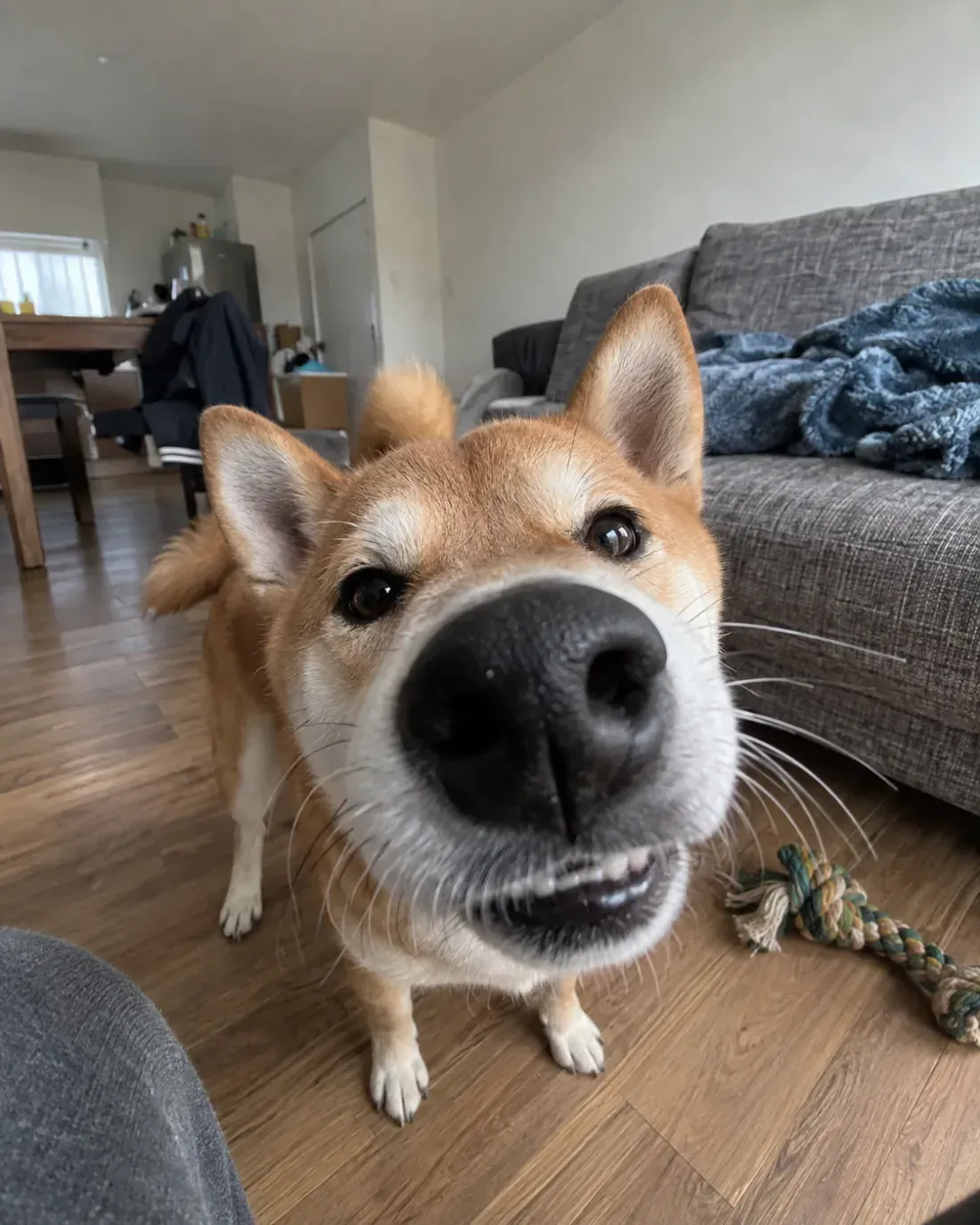
This is not a formal portrait. The exaggerated nose is the reason the moment—and the pet—feels so recognizable.
The unusual details are often the best details
When a photo becomes a virtual pet, the goal does not have to be a perfect miniature copy. A stylized result can still carry the feature that made the original moment memorable.
Look for details such as:
- the ear that never sits straight;
- an oversized nose close to the camera;
- a distinctive patch of fur;
- a favorite collar or accessory;
- a sleepy, suspicious, excited, or completely confused expression;
- the strange pose your pet always chooses.
These details give the result personality. A technically imperfect photo may be more useful than a generic “good” photo because it contains something specific to remember.
Choose the memory you want to keep
If you have hundreds of photos, do not search for one objectively best image. Choose the kind of memory you want the virtual pet to begin with.
- Choose an early photo if you want to remember how small they were.
- Choose a funny photo if humor is part of how you remember them.
- Choose an everyday photo if a familiar routine matters most.
- Choose a close-up if one expression or marking says everything.
- Choose a photo with a favorite object if that object belongs to the story.
You can always keep the original separately and try another meaningful moment later. One photo does not have to summarize an entire life.
What PetPip carries forward
PetPip uses your photo as the starting point for a personal virtual pet. The result is an AI interpretation, so colors, proportions, markings, or materials can change. What matters is whether the little character still points back to the memory you chose.
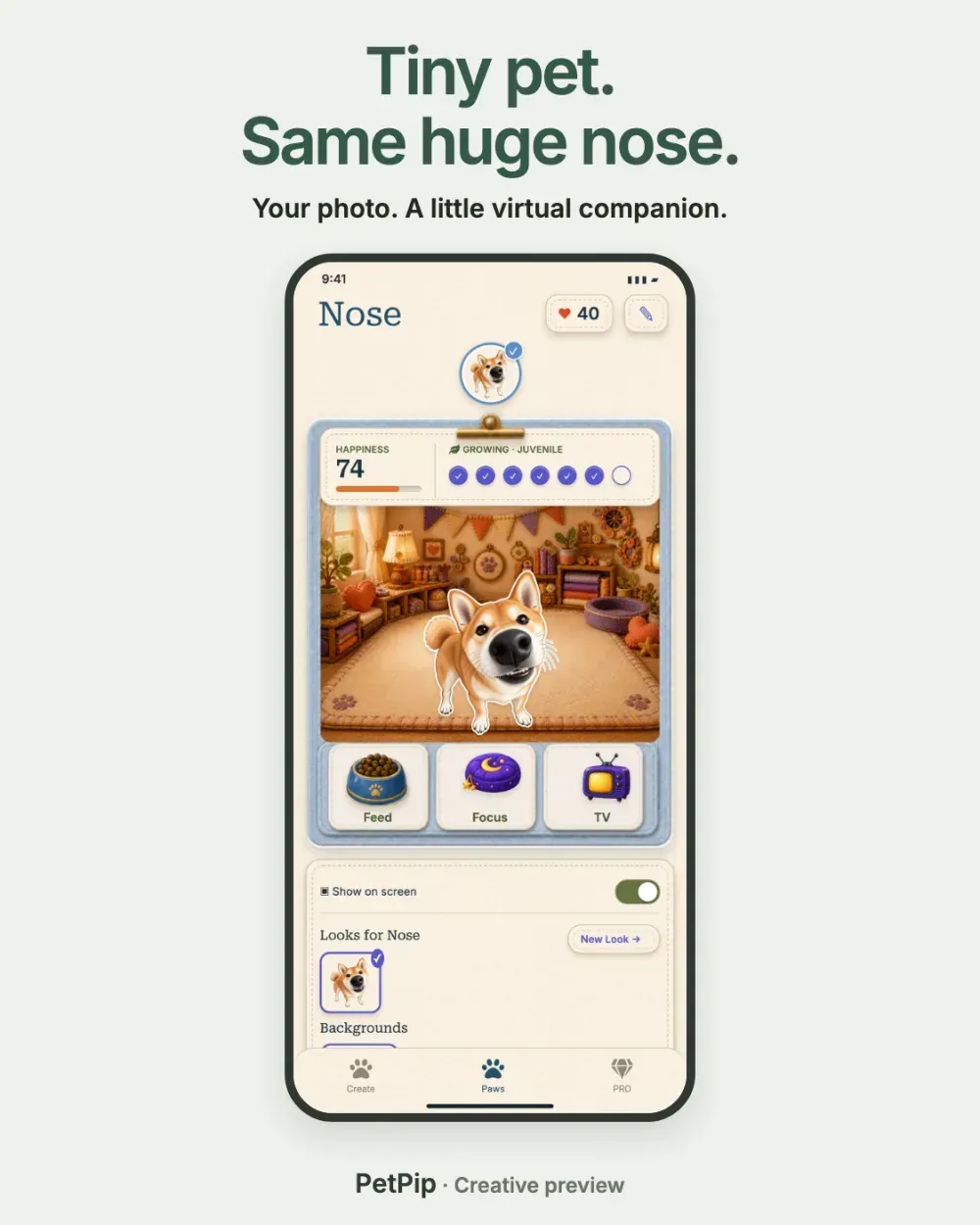
Approved internal creative example. The result keeps the photo’s most memorable feature without trying to reproduce every pixel.
The relationship does not end with one generated image. You can hatch the companion, care for it, feed it, spend focus time together, and watch it grow. Give it a little room on your iPhone Home Screen, or let it join you as a floating pet on Android. The photo becomes the first chapter of something you can return to.
Judge the feeling, not only the resemblance
When the companion appears, ask:
- Does one recognizable feature from the photo still stand out?
- Does the character remind me of the original moment?
- Would I enjoy seeing this little version again tomorrow?
It does not need to look like a formal portrait. If it brings the memory back and feels fun to keep around, the photo has done its job.