
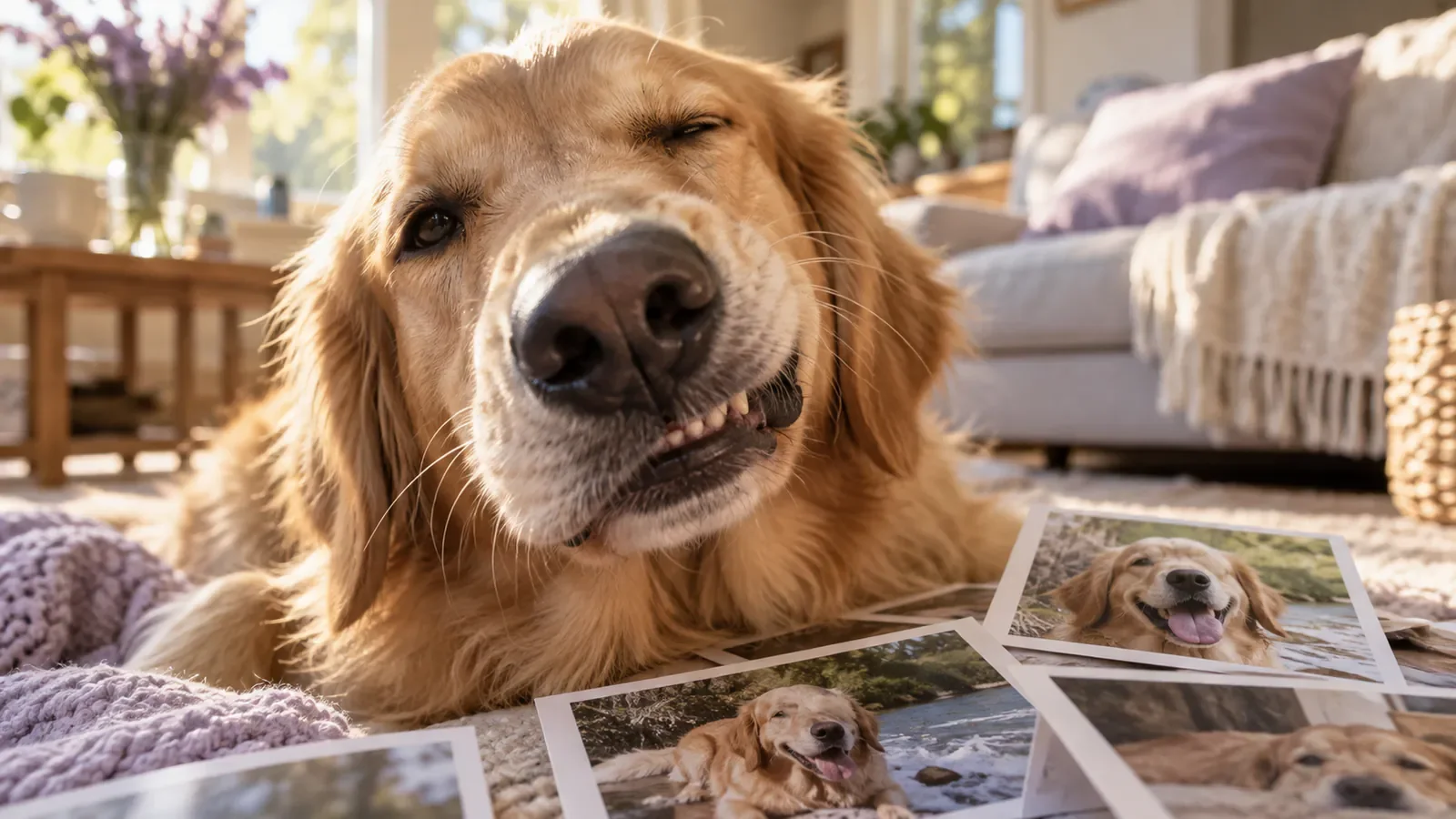
Open your pet album and notice which picture makes you smile first. It may not be the sharpest or best-composed image. It may be the frame with a nose too close to the camera, one ear folded the wrong way, or a sleeping position that seems physically impossible.
These pictures can be poor portraits and excellent keepsakes at the same time. A polished image records what an animal looks like. A funny image often records what living with them feels like.
Imperfect photos contain specific memories
A technically perfect photo can be beautiful without carrying much context. The odd ones often bring a whole moment back with one sentence:
- “This is how he sat whenever he wanted dinner.”
- “She always slept with one paw in the air.”
- “He pushed his nose into every camera.”
- “That was the day she discovered the laundry basket.”
The visible mistake becomes a shortcut back to a routine, room, sound, or personality. That is why deleting every blurry or awkward image can remove more than visual clutter.
Exaggeration makes a pet recognizable
People recognize familiar animals through a small set of repeated cues. It might be the angle of an ear, the shape of a white marking, a permanently serious face, or a habit of sitting like a person.
A funny photo often exaggerates one of those cues. A wide-angle close-up makes the nose enormous. A badly timed blink turns a dignified cat into a sleepy little stranger. A shake caught mid-motion sends the ears in opposite directions.
The image is not a neutral record, but the exaggeration can make the pet’s identity easier to remember.
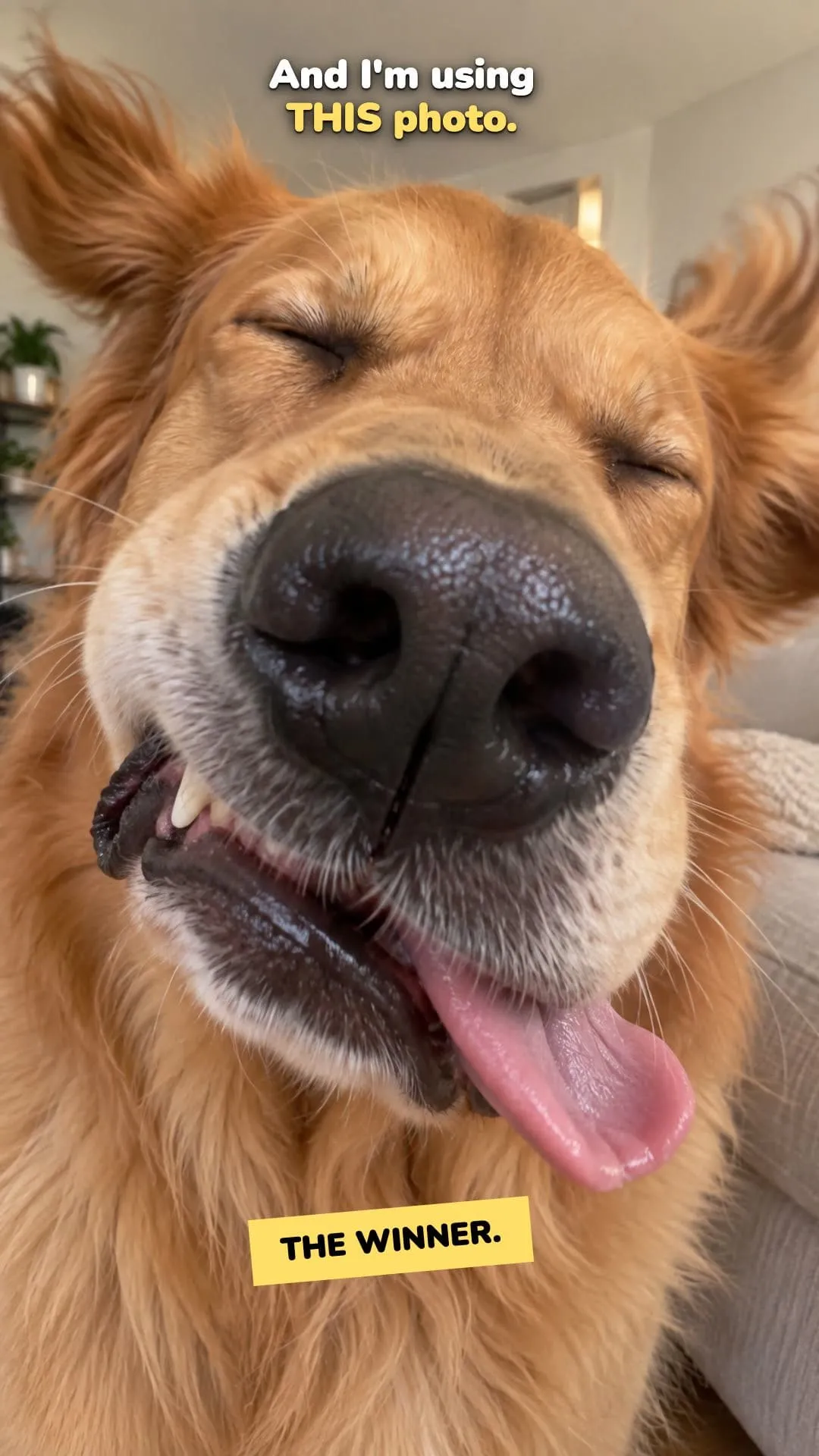
The frame is not a formal portrait, but its expression records a specific kind of personality.
A useful photo library needs more than favorites
You do not need to keep every burst photo forever. When you clean up your camera roll, try preserving three kinds:
- Clear reference photos: useful views of markings, face, and body.
- Everyday context: the bed, window, walk, toy, or person that belongs to the memory.
- Personality photos: the strange expressions and repeated habits that feel unmistakably like the pet.
If storage is limited, choose the frame that best tells the story rather than automatically keeping the sharpest one.
Funny photos can inspire other keepsakes
A favorite image does not have to remain only in the camera roll. It can become a print, a small photo book, a lock-screen image, a drawing reference, or the starting point for a digital character.
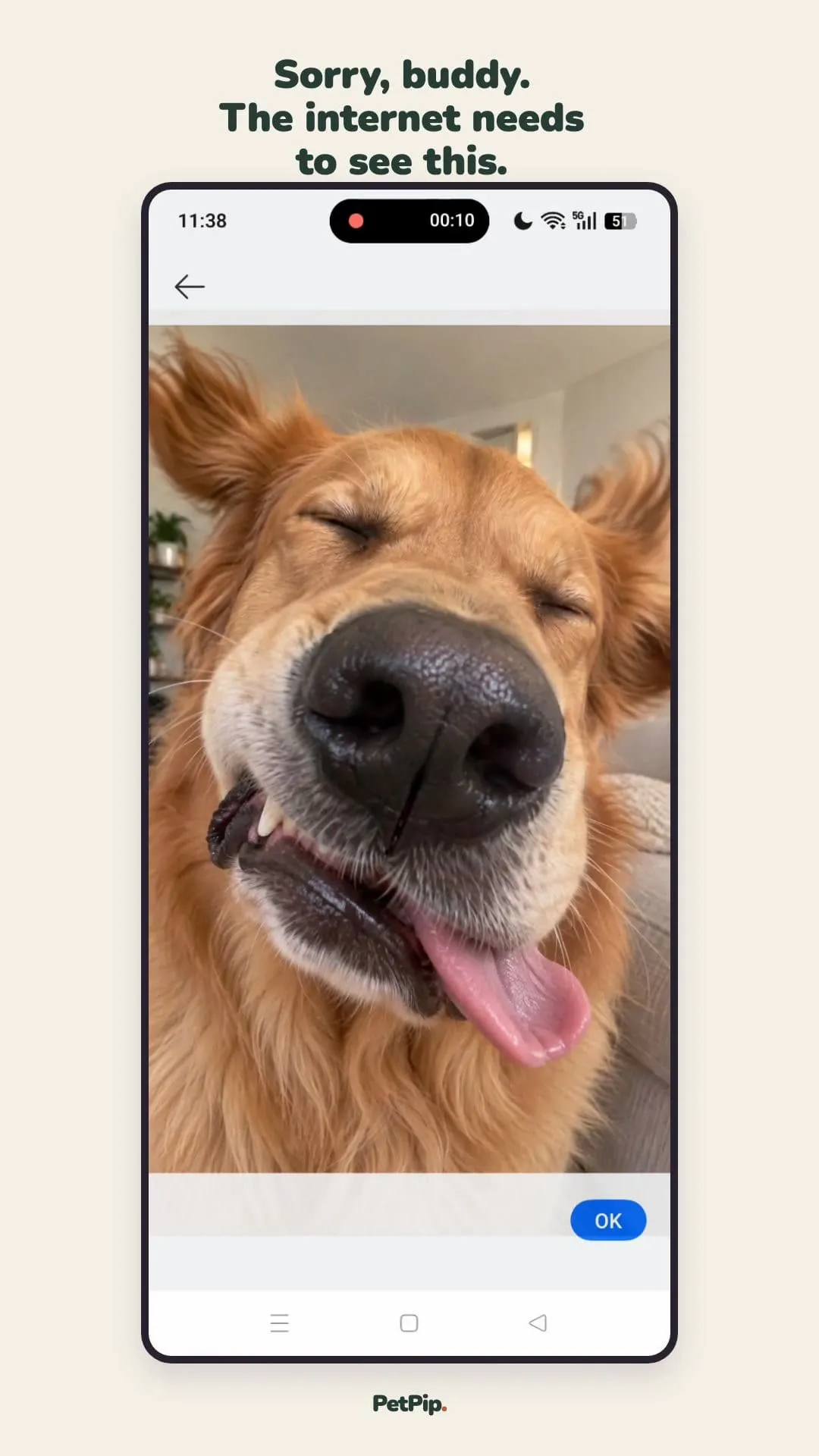
Keeping the original visible in the workflow makes it easier to judge which exaggerated feature should carry through.
PetPip—made by the team publishing this blog—lets you use a photo as the starting point for a screen pet you can hatch, care for, and watch grow. A funny source photo can work especially well when the joke is also the pet’s recognizable feature: the giant nose, uneven ears, or permanently sleepy expression.
AI interpretation can change proportions, markings, or details, so it should not be treated as an exact archival copy. Keep the original file. Think of the generated character as another way to respond to the memory, not a replacement for it.
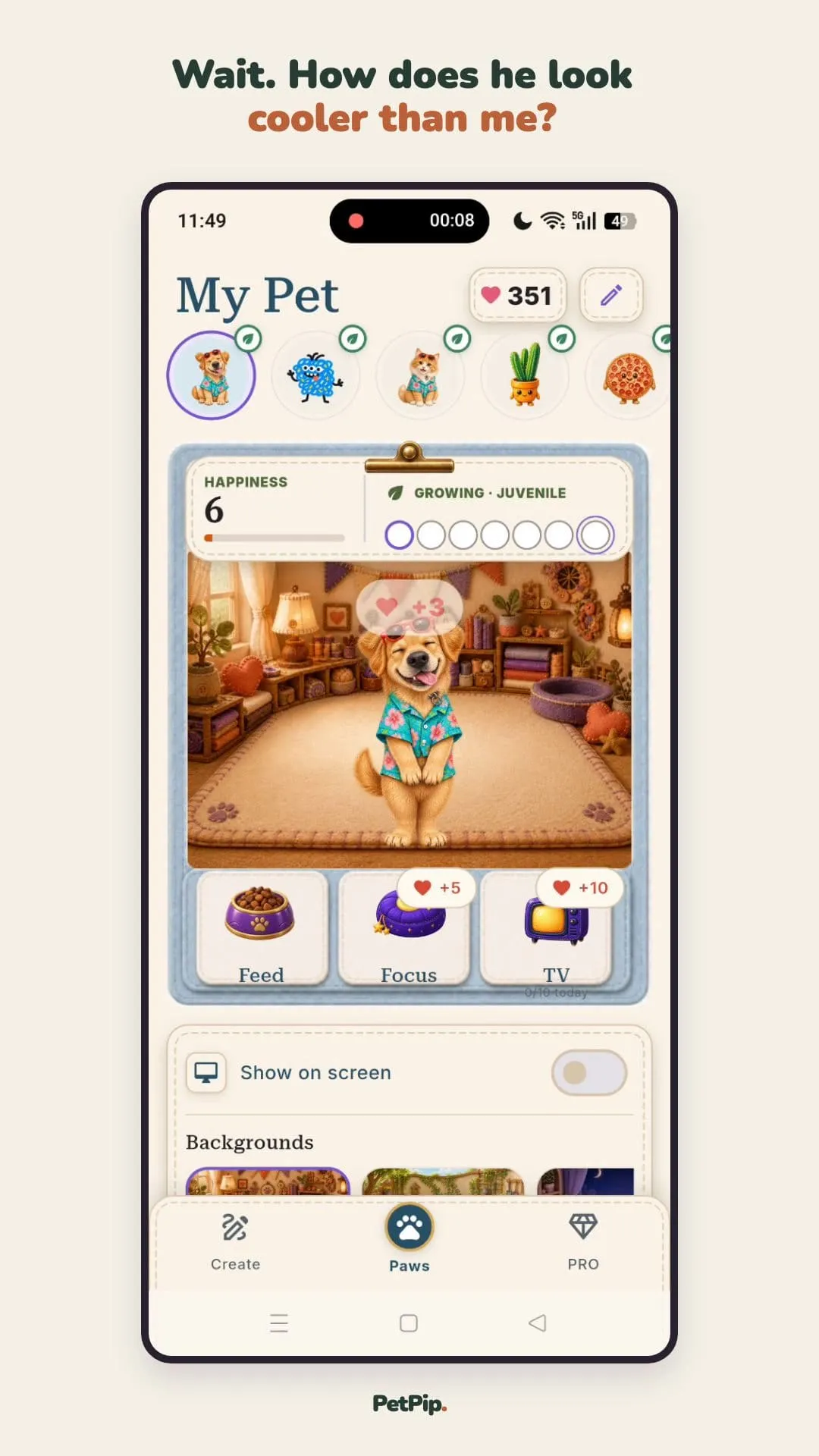
The result is a creative interpretation used for companionship, while the funny source photo remains the original record.
What makes a funny photo useful for creation?
If you want to use an unusual image in a creative tool, first check whether the joke is visually understandable:
- Is the pet still the obvious subject?
- Can you see the feature that makes the picture funny?
- Is the face or body readable despite motion or distortion?
- Would the image still make sense without its caption?
If the defining feature is completely hidden, keep the photo as a memory but choose a clearer frame for creation. If the big nose, crooked sit, or unruly ears are easy to see, the imperfection may be the most valuable part of the input.
Keep the photos that sound like your pet
Pet photography does not need to turn everyday life into a permanent portrait session. Some images deserve to stay because they are elegant. Others deserve to stay because they make you laugh before you have even explained them.
The second group is often where personality lives. Give those pictures an album of their own before the next camera-roll cleanup makes the decision for you.