An AI pet portrait gives you a finished picture. A virtual pet gives you a character you can return to, interact with, and care for.
Those are the two useful categories. A “screen pet” is not a separate third category—it simply describes a virtual pet that can stay visible or easy to revisit on your phone.
The difference at a glance
| AI pet portrait | Virtual pet | |
|---|---|---|
| Main outcome | A stylized image | An ongoing character |
| What happens next | Save, share, print, or display it | Return to feed, touch, play, focus, or follow progress |
| Where the value lives | In the finished artwork | In the relationship and routine over time |
| Typical starting point | A photo, prompt, or chosen style | A preset character or something you create yourself |
| Best when you want | A visual keepsake | A companion that continues after creation |
AI can be involved in either experience. The important difference is not the technology used to create the character. It is what you can do after the character exists.
An AI pet portrait ends with an image
An AI pet portrait is useful when the artwork itself is the goal. You might want a favorite photo in a new style, an image for a profile, a framed print, a card, or a gift.
Once you have a picture you like, the experience is usually complete. That is not a weakness—it is simply the product’s purpose.
A virtual pet continues after creation
A virtual pet gives you reasons to come back. Depending on the product, that may include feeding, touch, play, mood, collection, progress, customization, or time-based change.
Many virtual pets begin as characters designed by someone else: a mascot, pixel animal, fantasy creature, or established visual style. You choose from an existing set and then build a relationship with that character.
That can be enjoyable, but the character does not begin with your own memory.
A personal virtual pet begins with something of yours
PetPip is a virtual pet experience with a more personal starting point. You can begin with your own pet photo or drawing instead of only adopting a character whose identity has already been decided.
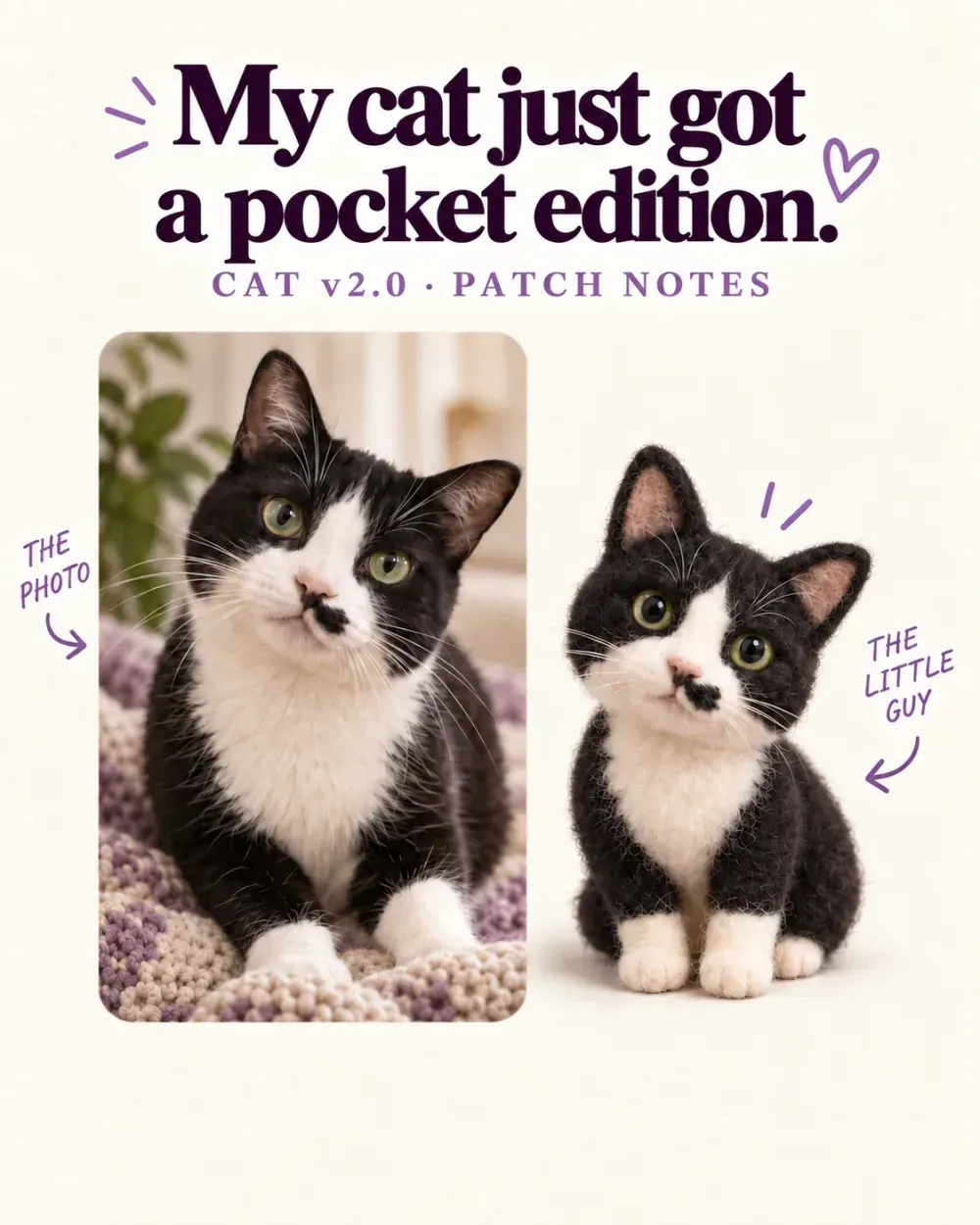
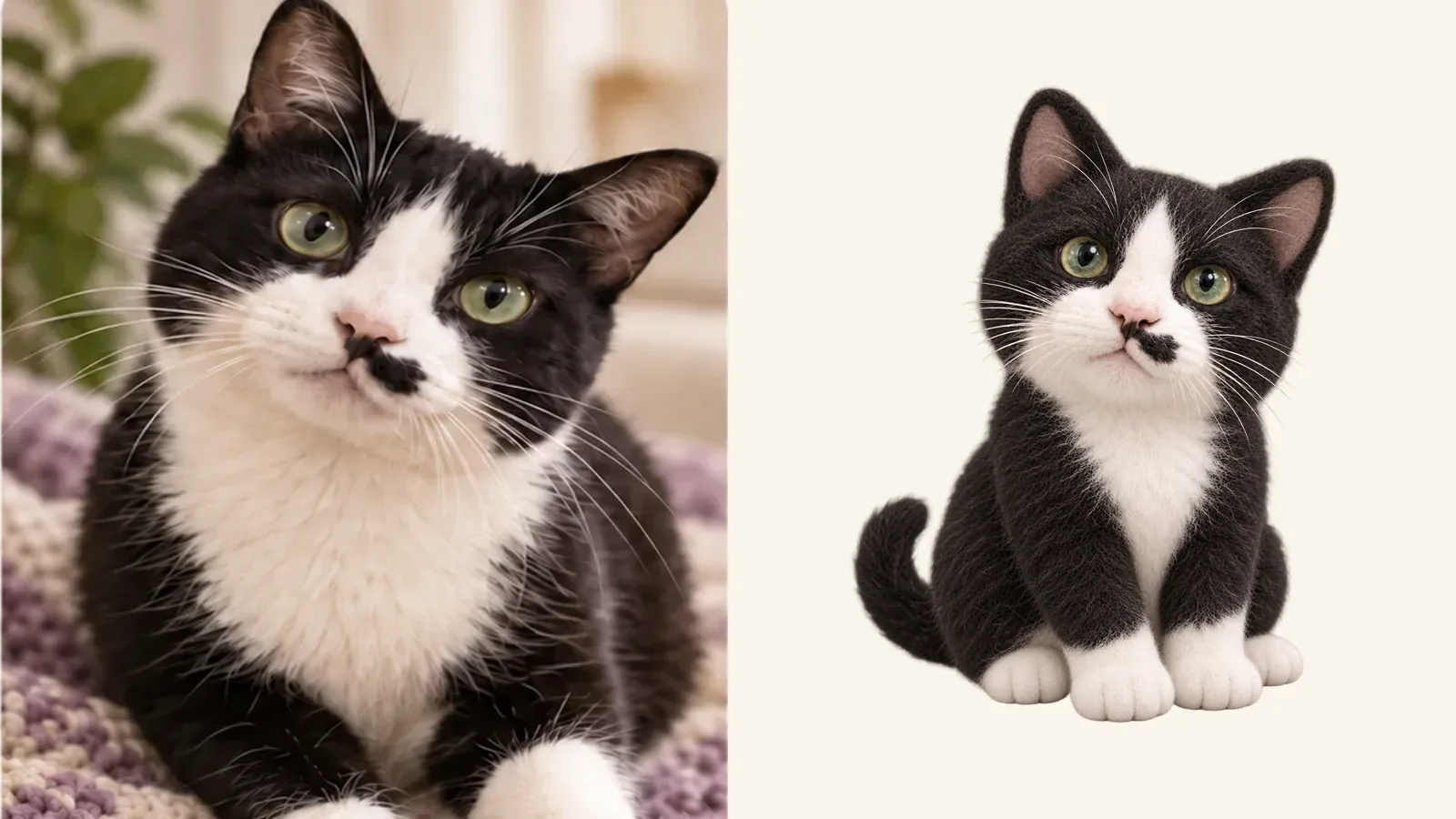
Approved internal creative example. The photo provides the identity; the result becomes a new virtual character.
The AI result is interpretive rather than an exact reconstruction. But recognizable details can give the companion a connection to the animal, drawing, or moment that inspired it.
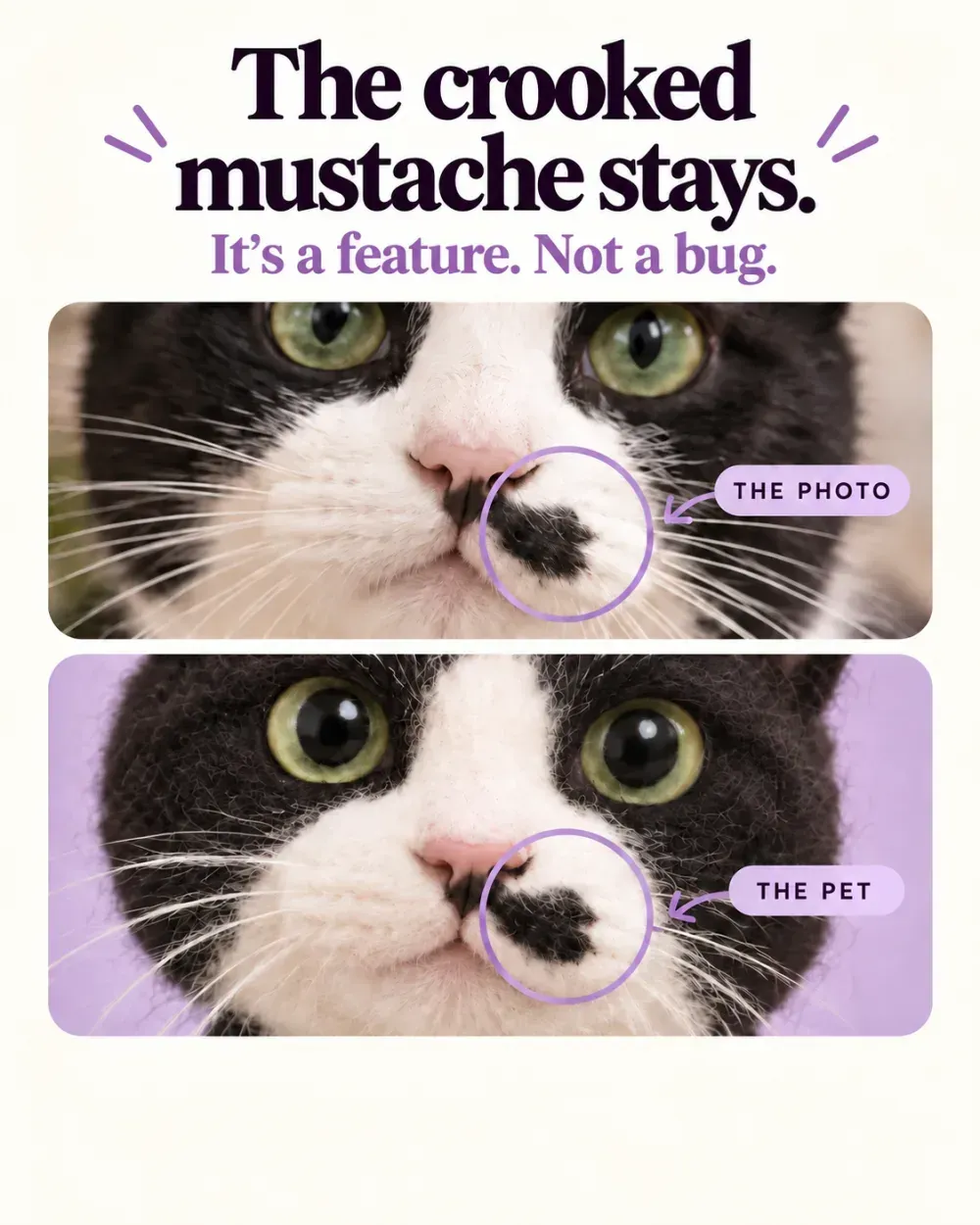
A personal detail can matter more than perfect realism because it explains why this character belongs to you.
Creation is the beginning, not the finish line
After the character is created in PetPip, you can hatch it, care for it, feed it, spend focus time together, and follow its growth. On iPhone, a little Home Screen room gives you somewhere to look for it. On Android, the floating companion can join you while you use your phone. It becomes a familiar presence, not only a finished picture.
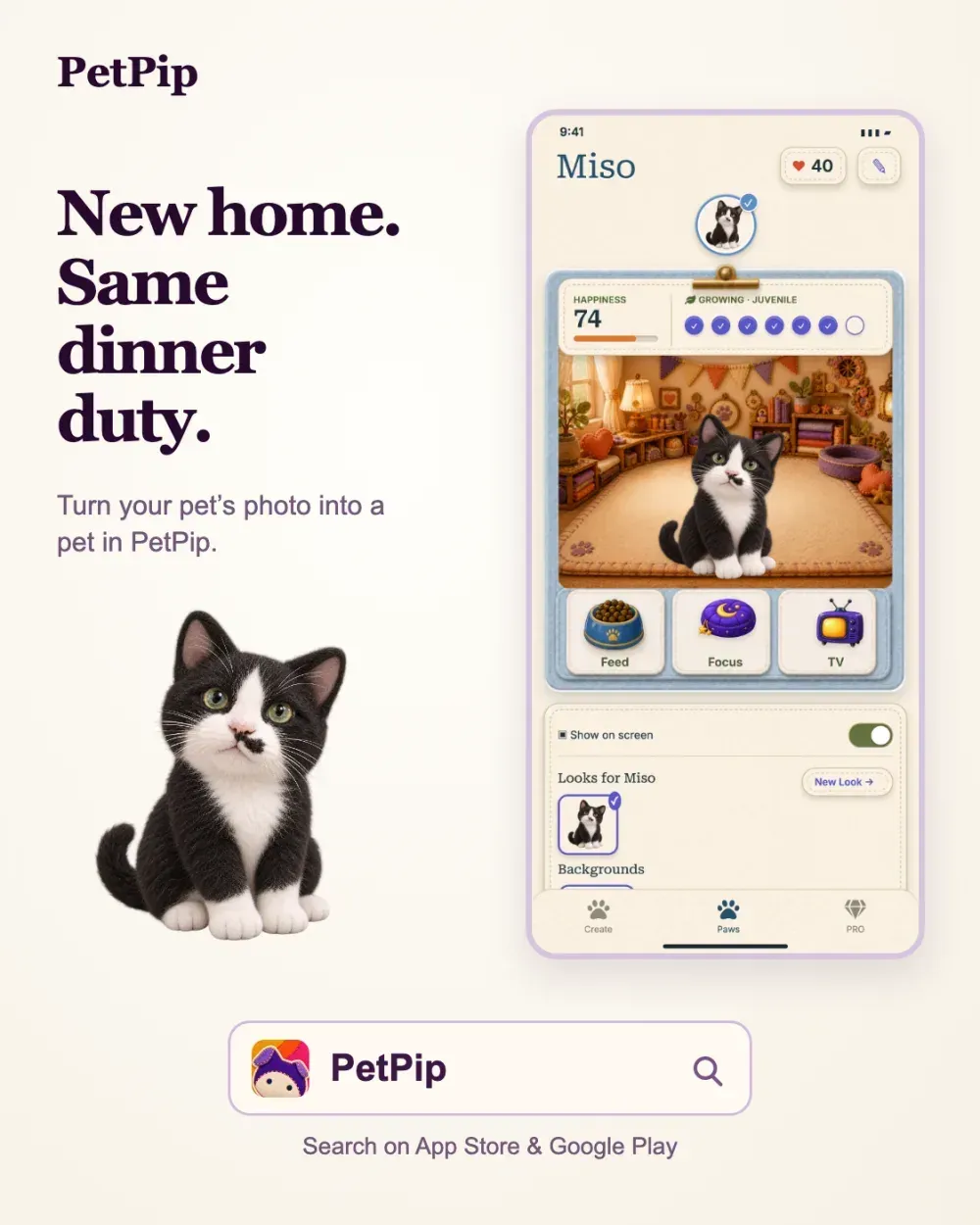
The result is not only an exported picture. It becomes a companion with care and progress.
This is where PetPip differs most clearly from a portrait generator. The personal source gives the character its history. The virtual pet experience gives it a future.
Which should you choose?
Choose an AI pet portrait if you mainly want a beautiful image to save, print, or share.
Choose a virtual pet if you want a character that changes your daily routine and gives you a reason to return.
Choose PetPip when you want that virtual pet to begin with something you created or a pet you already know—not only a preset IP, mascot, or character selected from a catalog.
Keep the original photo or drawing independently. AI creation can change details, and a personal virtual pet should add a new way to enjoy the memory rather than replace the source.