There is no single best way to remember a pet. The most meaningful choice depends on what you want to keep close: their face, their voice, the stories around them, something you can hold, or the feeling that they still have a small place in your day.
Across veterinary and animal-welfare support resources, the same kinds of memorials appear repeatedly. Printed photos, memory boxes, writing, artwork, living memorials, donations, and shared tributes are all common choices. You can choose one, combine several, or wait until you know what feels right.
1. Print the photos you want to see again
A framed print is one of the simplest memorials because it puts a familiar moment back into an ordinary room. It does not have to be the most formal picture.
Print the photo that feels most like your pet: the crooked pose, the first day at home, the look they gave you from the sofa, or the image everyone in the family immediately recognizes.
You could also make:
- a small photo book arranged by year or life stage;
- a set of prints for different family members;
- a scrapbook with captions and small stories;
- a rotating album instead of choosing one permanent image.
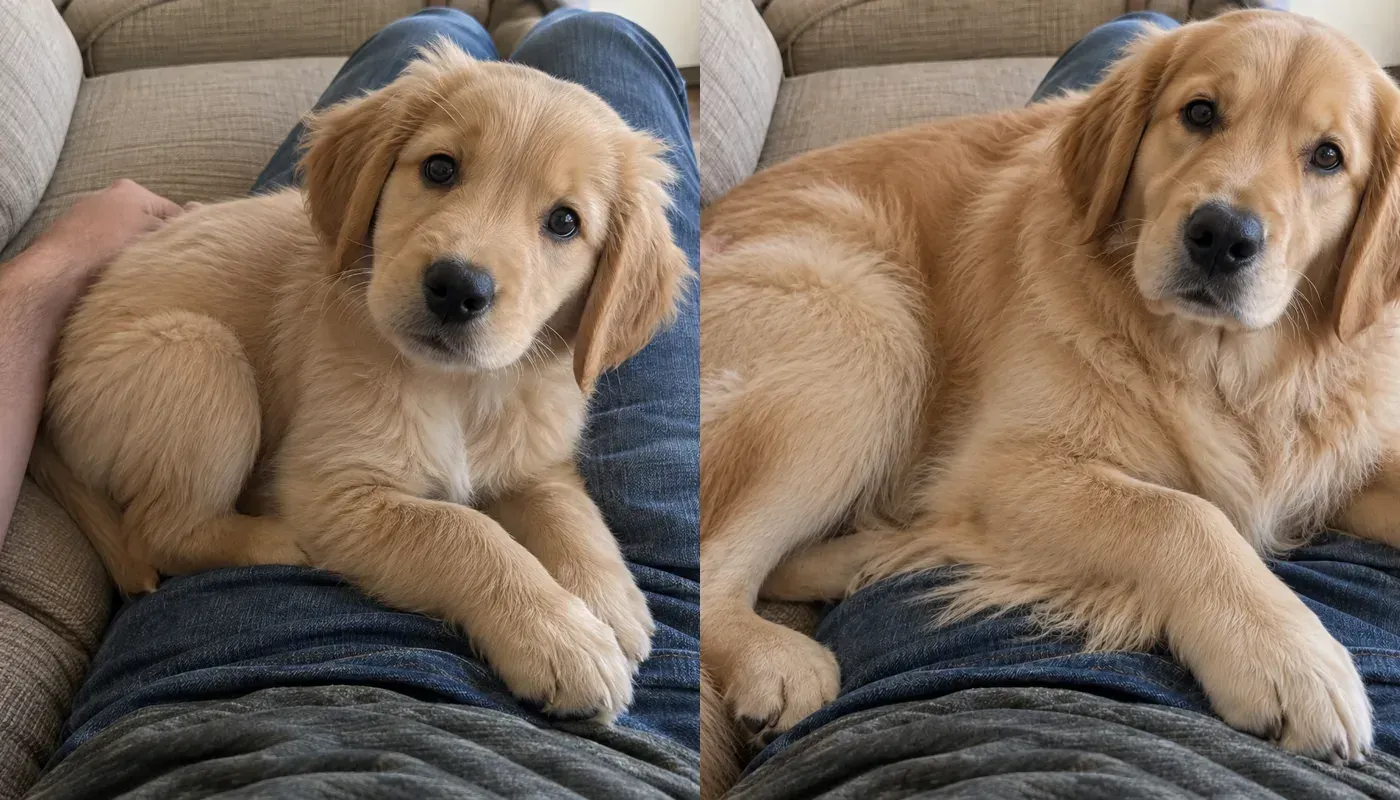
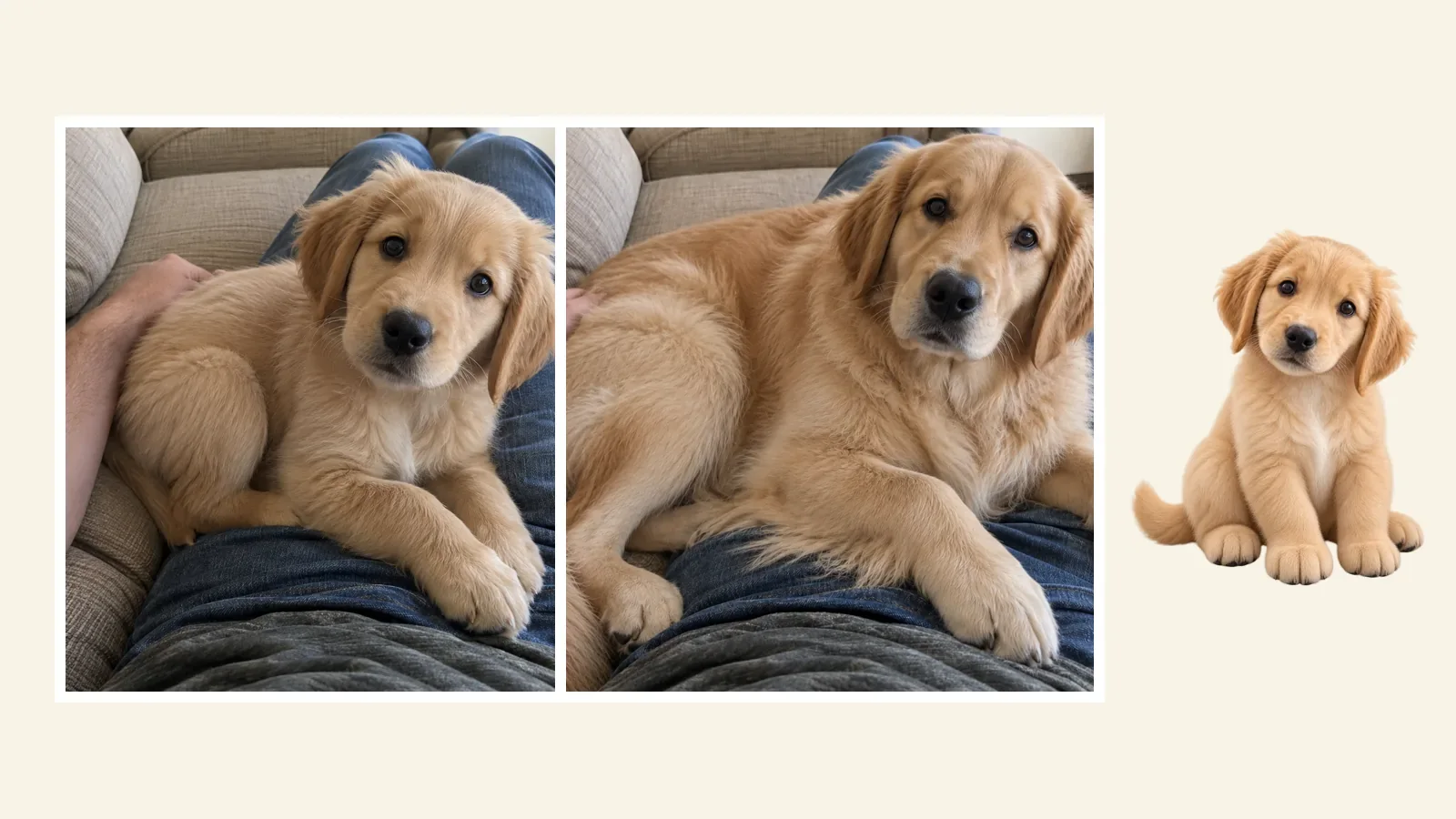
A pair of ordinary photographs can preserve both the pet and the time that passed around them. This is approved internal illustrative material, not a customer memorial.
Keep the original full-resolution files backed up even after printing. The print is the object you revisit; the archive protects the wider collection.
2. Make a memory box from everyday objects
A collar, tag, favorite toy, paw print, blanket, or handwritten note can preserve the physical details photographs miss.
The box does not need to be displayed or opened often. Its value may simply be knowing that the small objects connected to daily routines are together and safe.
If several people shared the pet, ask before placing every item in one box. Someone else may want to keep a tag, photo, or toy close to them.
3. Turn one memory into artwork
A portrait, drawing, embroidery, ornament, sculpture, or handmade collage can focus on one quality you remember most.
The artwork does not need to reproduce the pet perfectly. Some of the most personal pieces emphasize the oversized ears, strange sleeping position, crooked marking, or permanently serious expression that made the pet recognizable.
This works especially well when you want a finished object to display, print, or give to someone else.
4. Preserve the stories, movement, and sound
Photos cannot keep everything. Write down the nickname no one else knew, the sound of their footsteps, the place they waited at dinner time, and the habit that was annoying then but precious now.
You can preserve those memories in:
- a journal or letter;
- captions added to a photo album;
- a short video using original clips and natural sound;
- a private or shared digital memorial page;
- a collection of stories contributed by family and friends.
A few specific sentences are often more valuable than a polished tribute because they keep details that would otherwise fade.
5. Create a living memorial or give something back
Some people prefer a memorial that changes or helps something else grow. Common choices include planting a tree or flowers, placing a small marker in a favorite spot, volunteering, or donating to an animal organization in the pet’s name.
This kind of memorial connects remembrance with an action. It can be private, shared with family, or revisited on meaningful dates.
6. Keep a personal companion in your everyday routine
A printed photo and a portrait stay still. Sometimes that is exactly what you want. But some people miss the small daily act of checking in and seeing their pet nearby.
PetPip offers a different kind of remembrance. A meaningful photo or drawing can become the starting point for a personal virtual pet—not a predesigned character whose identity was chosen by someone else, but a companion connected to something of your own.
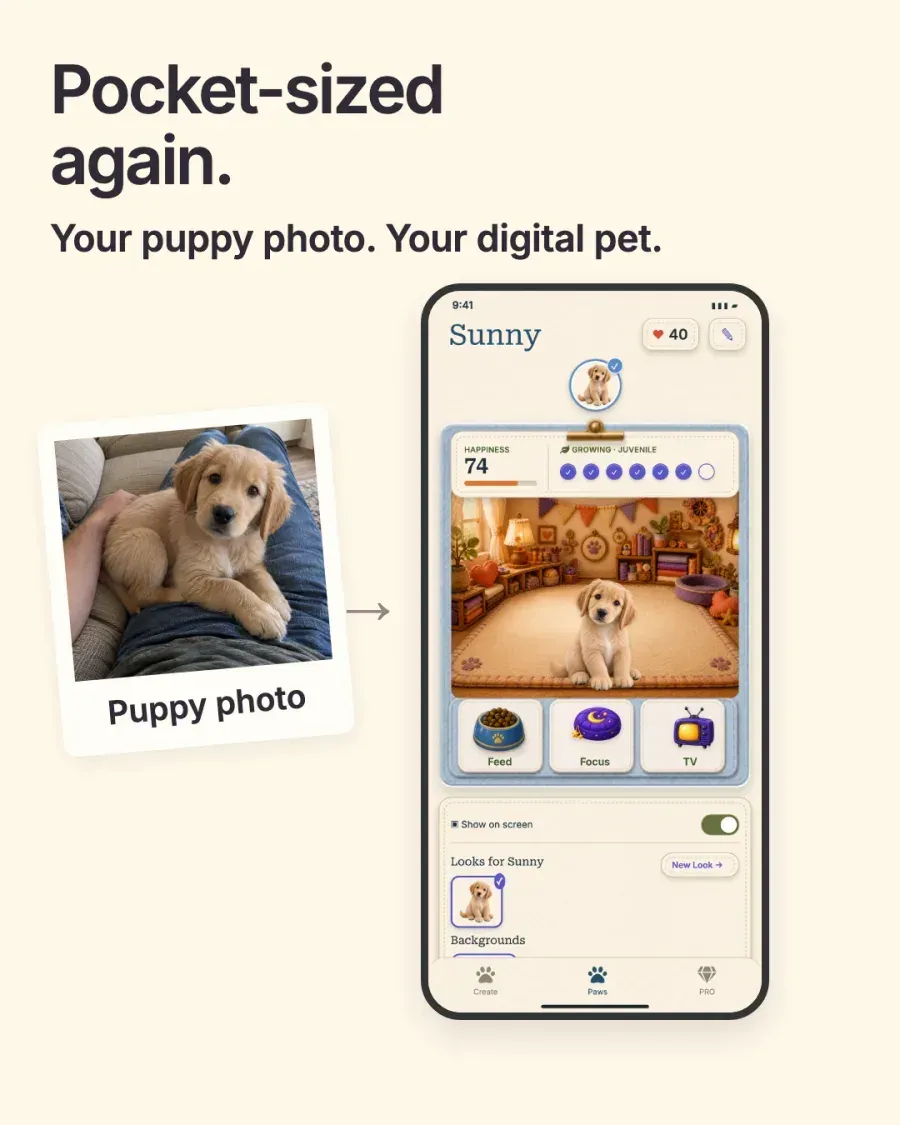
Approved internal creative example. AI results are interpretive and will not reproduce every detail exactly.
You can hatch the companion, feed it, touch it, spend focus time together, and follow its growth. Its little room on your iPhone Home Screen, or its floating visits on Android, gives you a way to see that familiar face in an ordinary moment. The main value is not creating one more picture. It is sharing a small routine with the companion every day.
PetPip should sit beside the original archive, not replace it. It is not a reconstruction of the animal or a treatment for grief. It is a gentle way for one meaningful image to continue having a place in daily life.
Choose the form that matches the memory
Choose a print when you want to see one moment at a glance. Choose a memory box when you want something physical to hold. Choose writing or video when the story, voice, and movement matter most. Choose a living memorial when you want remembrance to become an action.
And choose a personal virtual pet when the part you miss is the everyday presence—the feeling of seeing your pet nearby and returning to a small routine together.