When you see your pet every day, growth hides inside the routine. A puppy becomes heavier one ordinary week at a time. A kitten’s face changes between breakfasts. The collar moves to a new hole, the paws stop looking oversized, and a favorite sleeping place becomes too small.
Then an older photo appears and the change becomes obvious all at once.
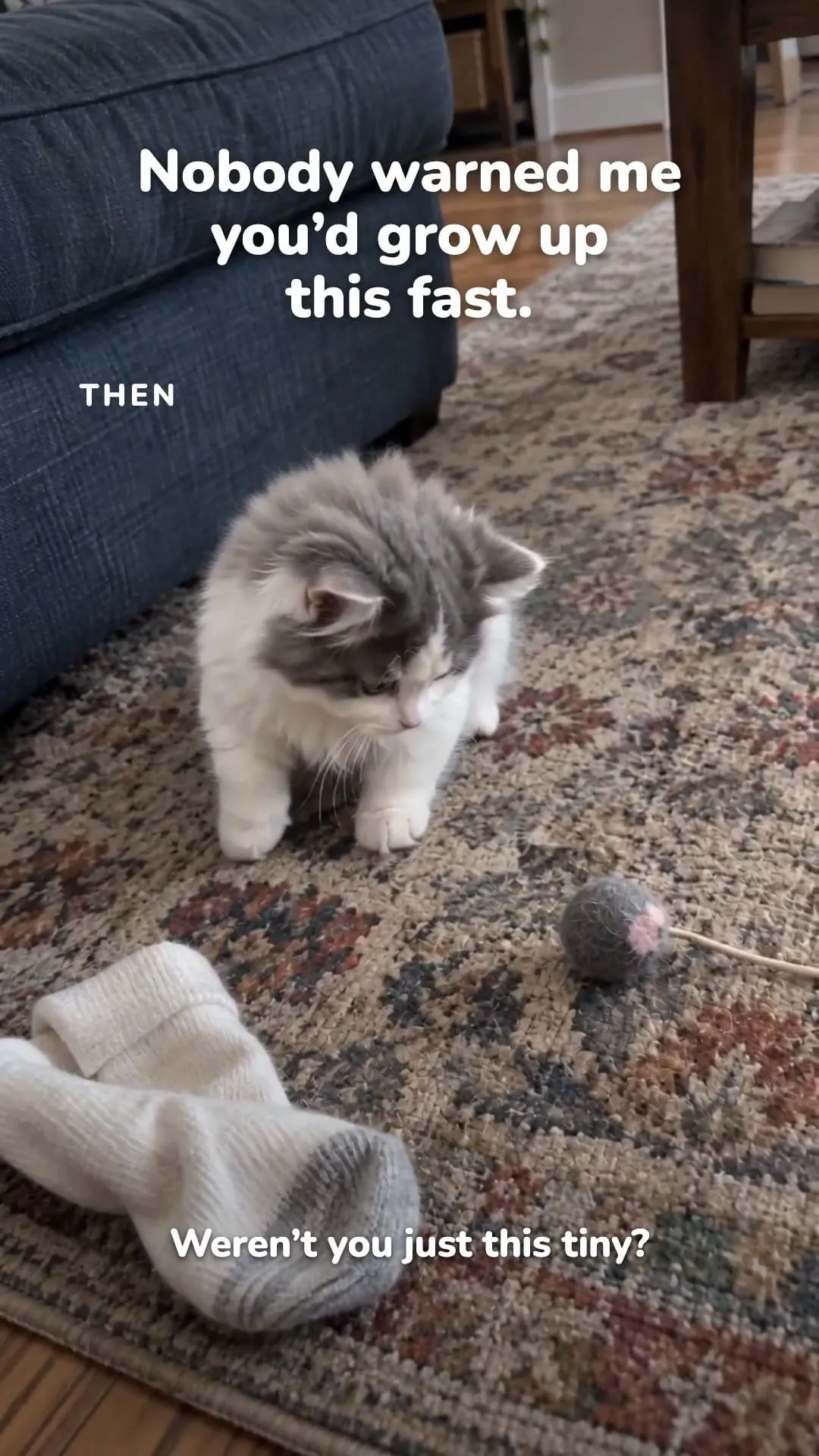
An ordinary early-life frame becomes meaningful when there is a later view to compare with it.
Comparison works because the surroundings stay familiar
The most revealing before-and-after pictures are not always formal milestone portraits. They often show the pet returning to the same place: the same lap, couch, doorway, carrier, blanket, or window.
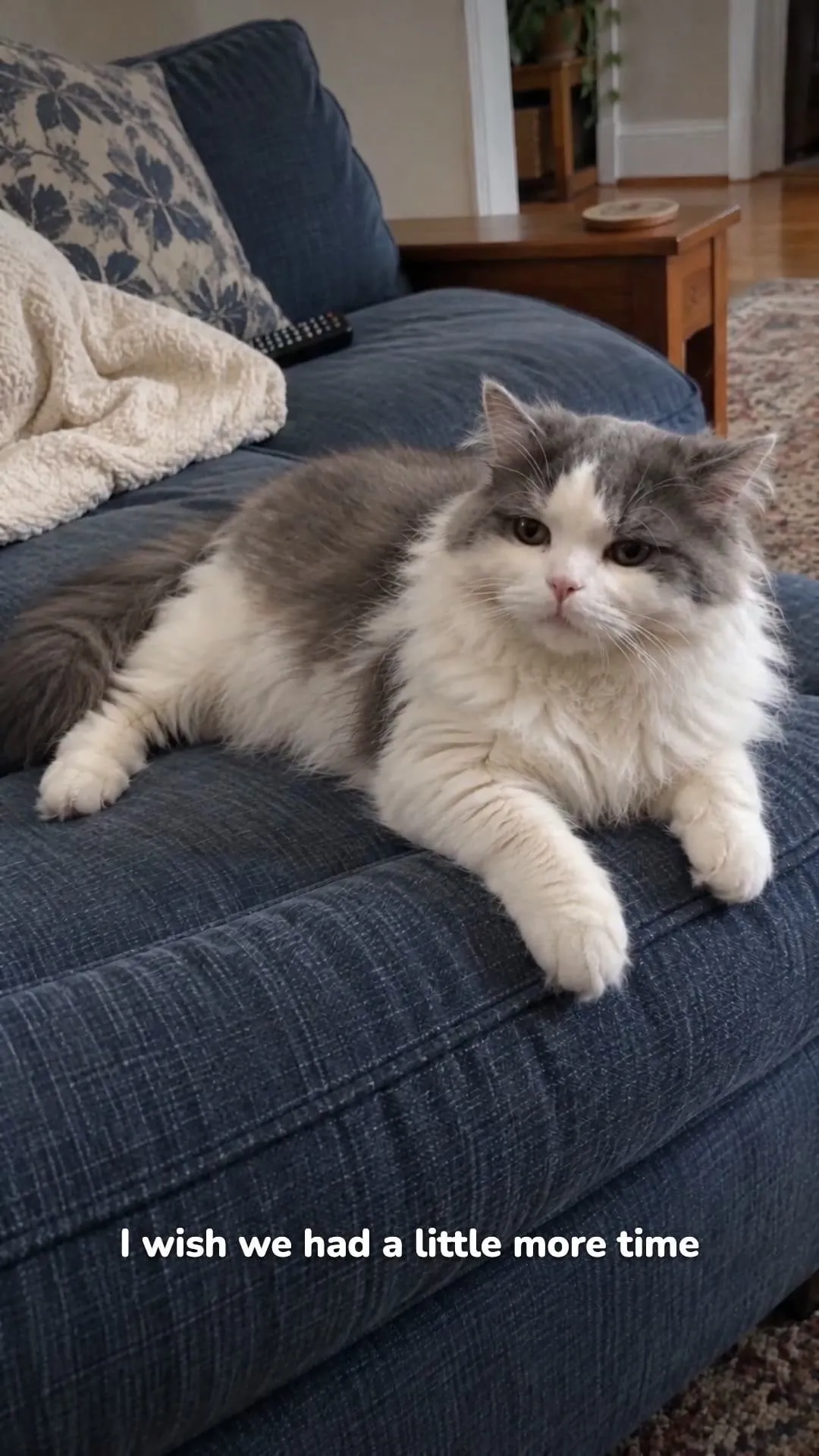
The surroundings help the eye register how much the cat’s body and face have changed.
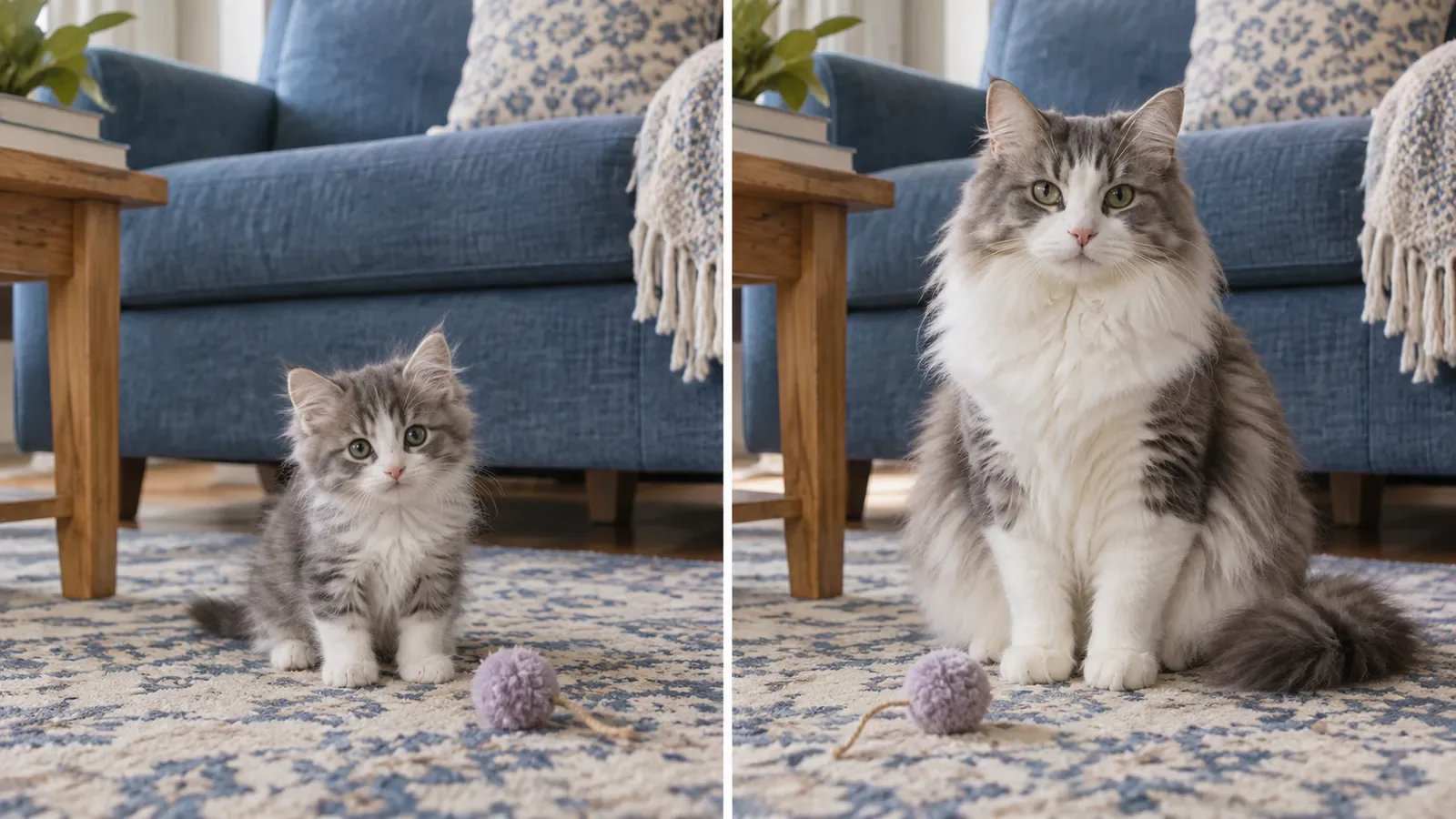
That fixed point gives the eye something to measure. In the photo pair above, the cat grows from a small kitten into an adult while the familiar room, blue sofa, and nearby toy make the difference easier to see. The setting stays recognizable even when the scale and proportions change.
Repeat one ordinary photo on purpose
If your pet is still young, choose one simple setup now that will be easy to repeat. You might photograph them:
- sitting beside the same chair leg;
- lying on the same blanket;
- being held in the same position;
- standing beside a favorite toy;
- looking through the same window.
Repeat the picture every month or whenever you remember. Precision is not necessary. A consistent object or location is enough to make the change readable later.
Avoid using food, unsafe restraints, or stressful posing just to reproduce an image. The comparison should fit the animal’s comfort and normal routine.
Photograph the details that will disappear
Size is only one kind of growth. Young animals also change in quieter ways:
- soft puppy or kitten fur changes texture;
- eye color can settle;
- ears rise, fold, or grow into proportion;
- baby teeth disappear;
- markings become clearer;
- favorite sleeping shapes change as the body grows.
Take a few close views alongside full-body pictures. A paw beside your hand, the hair behind an ear, or a collar that once looked too large may become more meaningful than a perfectly centered portrait.
Add context while you still remember it
Your camera roll preserves the image but not always the story. Add a short caption, album note, or filename with the date and one concrete detail:
First week home. Still carried the blue toy everywhere.
Specific notes age better than generic labels such as “cute puppy.” They help you recover the routine around the image, not only the animal’s appearance.
Keep originals before making creative versions
Photo books, illustrations, collages, and digital companions can give old images new life, but they should sit beside the original files rather than replace them.
PetPip—made by the team publishing this blog—can use a pet photo as the starting point for a screen pet. That can be a playful way to keep a younger version close in a daily phone experience. AI results are interpretive, however, and may change markings, proportions, or details. Keep the original at full quality and back it up independently.
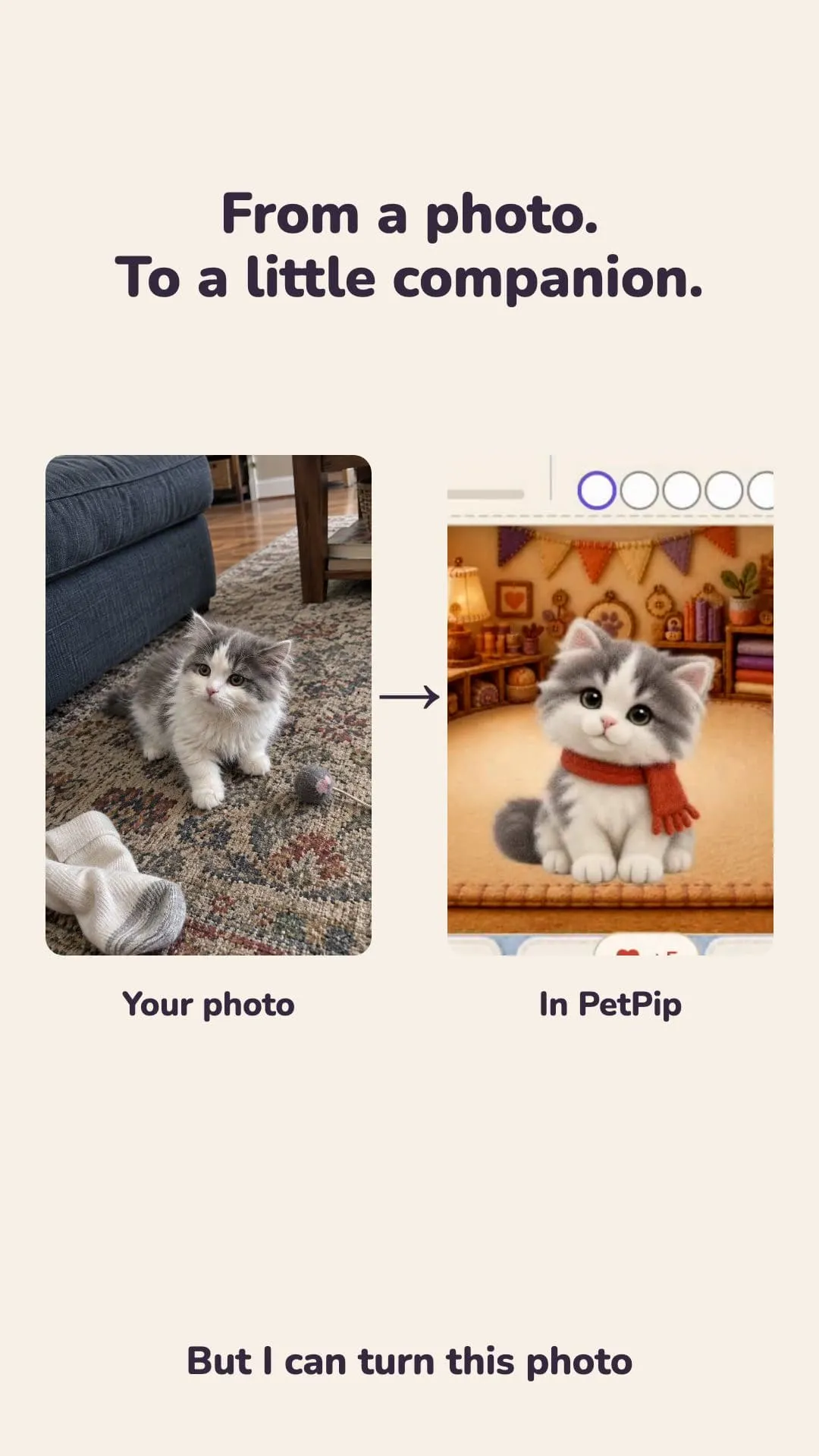
A creative version can respond to the younger photo without replacing the original or claiming to reproduce it exactly.
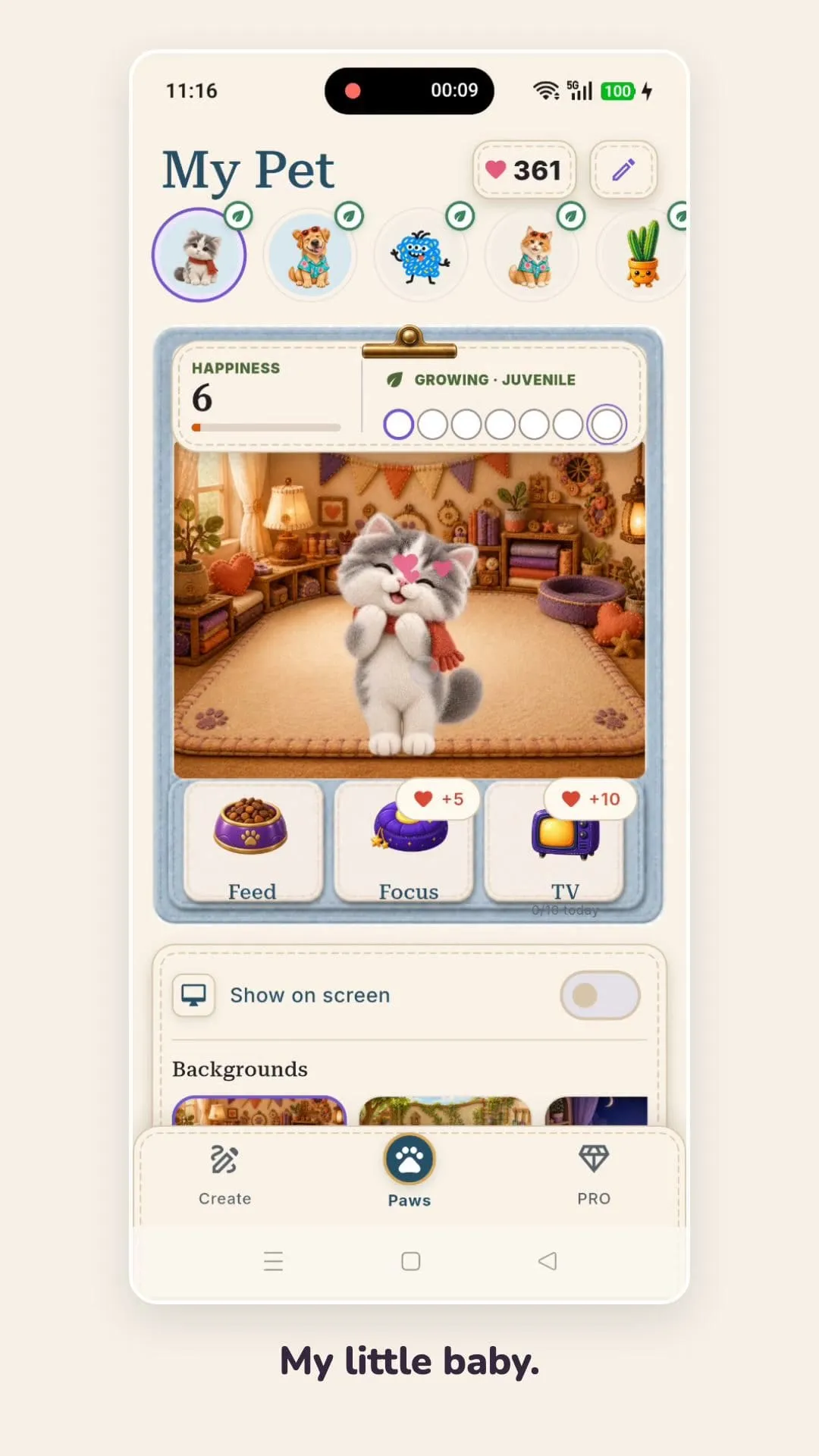
Once created, the image becomes part of an ongoing companion experience rather than only a one-time portrait.
A small system is better than a perfect archive
You do not need to document every day. Start with a routine you can actually maintain:
- Save one clear photo each month during the first year.
- Keep a separate album for repeated-location comparisons.
- Add a sentence when a photo carries a specific story.
- Back up the originals outside a single phone.
The value appears over time. Months later, two ordinary images can reveal a change that daily life made almost invisible. If you do only one thing after reading this, save one clear photo from this month and write down where it was taken.
They also reveal something that did not change: the pet may no longer fit in the same place, but they often still expect to belong there.